Captain Ratatype
When recording a "Voice Note" is truly better than typing
Have you ever had a moment when an idea struck you mid-walk, while driving, or while out with your child — and there was simply no way to write it down? We're sure you have. What's the best solution in that moment? Record a voice note or send a voice message to a colleague, a friend, or yourself. It's fast, and convenient, and you can always transfer the thought to a document or paper later.
It's equally handy to use your voice for a search query or to ask an AI assistant a quick question and get an answer.
But this doesn't always work.
5 situations where voice input works worse than text
- You're working in an open-plan office or sharing a room with colleagues. Dictating an email, writing a prompt for ChatGPT, or sending a personal message to a friend in a shared space is, at best, impolite — and at worst, unprofessional. First, it can disturb others; second, not everyone needs to know what you're discussing with your parents or friends. In such cases, text input is the only way to go.
- You need to type technical content. Try dictating something like "Create an async/await function with a try-catch block and return a Promise" — or an email containing product SKUs, abbreviations, brand names, surnames, and so on. Voice systems still make plenty of mistakes with proper nouns and don't always handle language-switching well.
- You want to edit your own notes or rework a written text. Imagine dictating to your device, "Delete the third sentence of the second paragraph and replace the word 'uses' with 'applies'." Would that be convenient? Hardly.
- If you wish to take notes during a work meeting, a conference, or even an online parent-teacher session, voice input simply isn't an option. Text entry, on the other hand, lets you write in parallel with those activities without losing the thread of the conversation.
- Most people think more deeply when they write rather than speak. Speech is linear — you simply dictate whatever comes to mind, with no way to go back two sentences, reorder a word, or rephrase it. Text lets you restructure a thought and strengthen it.
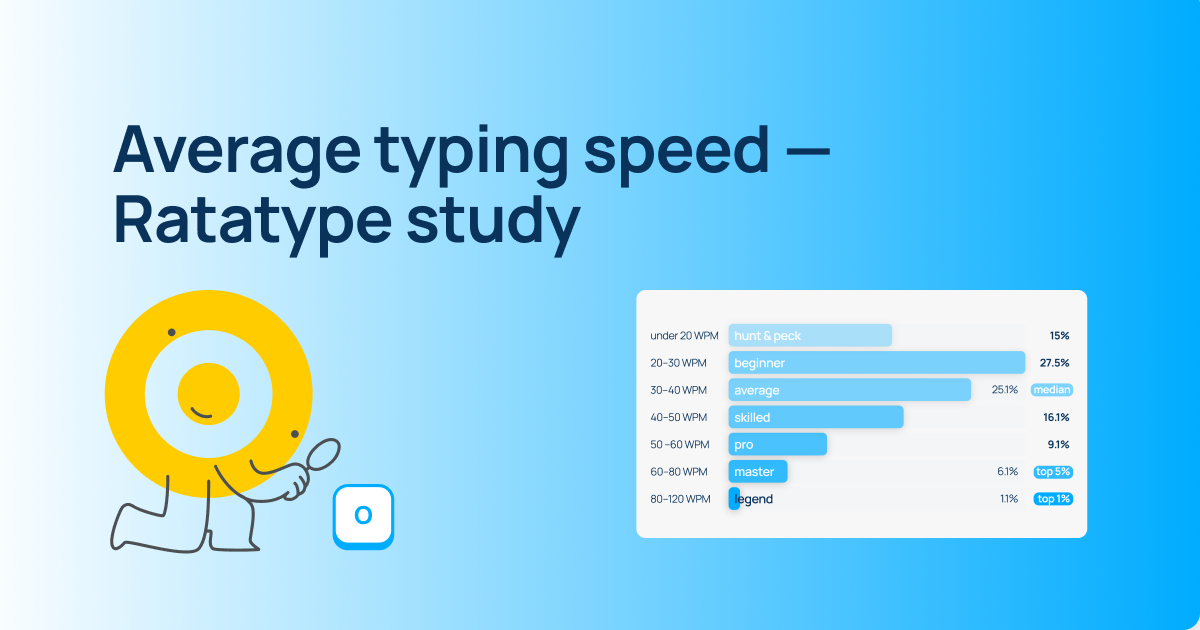
- Real-world voice input speed is around 30–35 words per minute (accounting for pauses, corrections, and background noise) — lower than the average typing speed of 40–55 wpm. And if you master touch typing, your speed can reach 70+ wpm.
- Voice assistants recognise only 95% of speech correctly. That sounds great — until you realise that on a 500-word text, that's 25 errors to find and fix by hand. And that's in a quiet environment. In a noisy office, the error rate climbs to 12%.
AI is shifting the balance in favour of typing
Voice input used to fall short only in accuracy. But with the rise of AI tools, there's now another argument in favour of text.
Working with AI tools is a text-based dialogue. ChatGPT, Claude, Gemini, and Copilot — all of them are built around a written prompt. You can, of course, ask questions by voice, but refining them, adding context, copying and pasting parts of a response back into a prompt, editing, and correcting — all of that happens at the keyboard. And the more humanity shifts toward AI, the more valuable fast, accurate typing becomes.
Text typed from a keyboard is the language the digital world speaks today. That makes the skill of fast typing especially valuable in 2026.
Do you know how fast you type?